


On paper, King Charles III's address to the U.S. Congress was about the UK/US relationship as we approach the 250th anniversary of declaring our independence from the motherland.
In reality, the speech was about the present.
With Donald Trump continued tariff threats, questioning NATO obligations despite multiple wars, and even calling the UK Prime Minister a coward for not jumping into the US’s ‘excursion’ in Iran, the King’s speech was a reminder of what the relationship between the two countries has been, and what’s at risk if it doesn’t re-solidify.
If you missed the speech, here are the 10 lines to know, with the context you need.
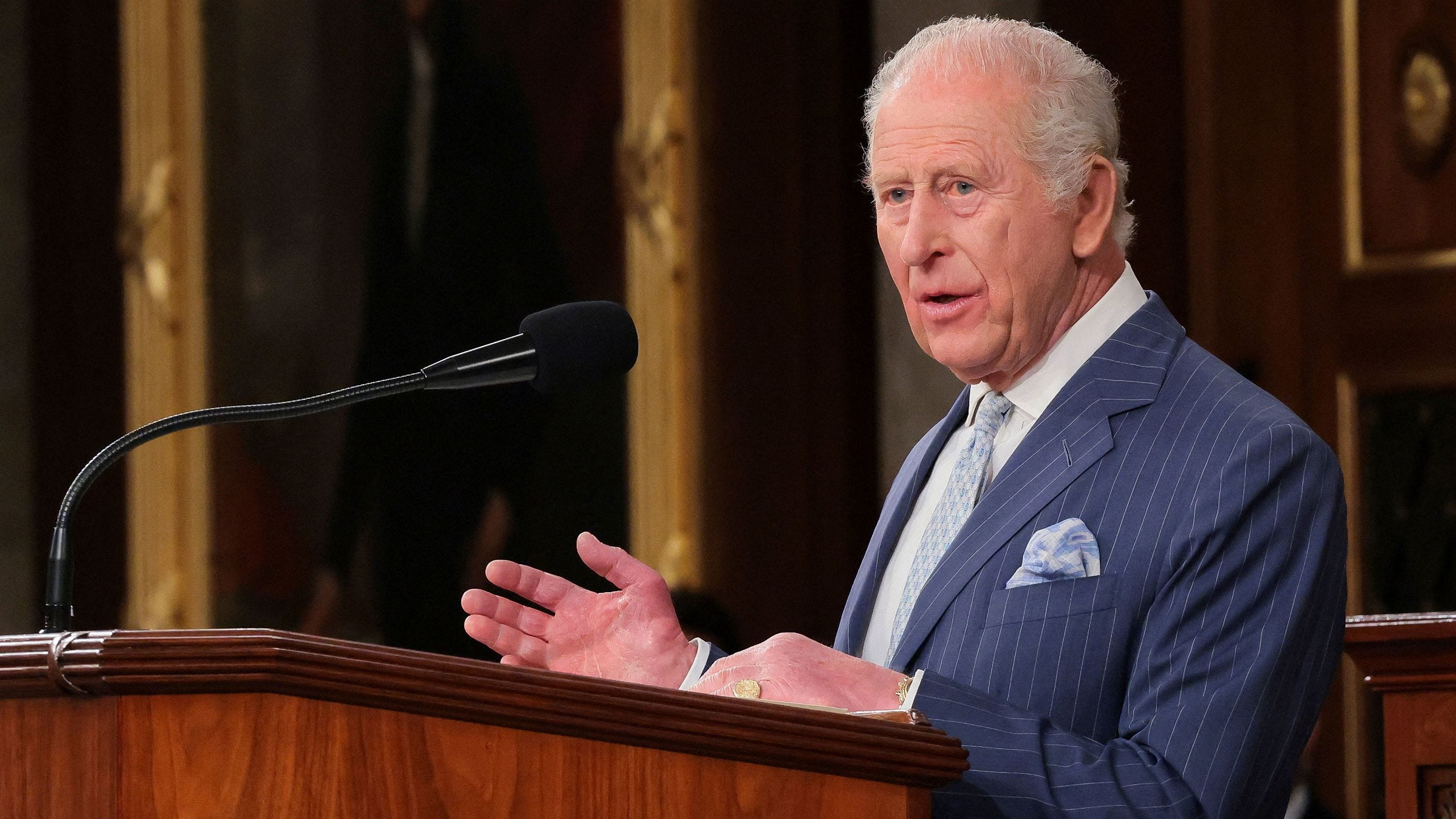
1. “We meet in times of great uncertainty; in times of conflict from Europe to the Middle East which pose immense challenges for the international community and whose impact is felt in communities the length and breadth of our own countries.”
This opening grounds the speech in global instability rather than celebration. By immediately pointing to conflicts abroad with domestic consequences, he’s framing U.S. leadership as inseparable from international engagement.
2. “Whatever our differences, whatever disagreements we may have, we stand united in our commitment to uphold democracy, to protect all our people from harm…”
That repetition—whatever our differences—is doing quiet diplomatic work. It acknowledges real policy and political tensions between allies while insisting those disagreements should not override shared democratic commitments.
3. “With the spirit of 1776 in our minds, we can perhaps agree that we do not always agree… Ours is a partnership born out of dispute, but no less strong for it.”
He leans into disagreement as a defining feature of the U.S.-U.K. relationship, not a flaw. The message is that conflict—past or present—is not a justification for disengagement, but something historically managed within the alliance.
4. “The Founding Fathers were bold and imaginative rebels with a cause… they declared Independence… and united 13 disparate colonies to forge a nation…”
A British monarch praising the American Revolution is more than historical reflection—it’s strategic. By validating the founding moment, he reinforces democratic legitimacy while sidestepping any sense of hierarchy between the two nations.
5. “Not by the will of one, but by the deliberation of many, representing the living mosaic of the United States.”
This is a clear endorsement of pluralism and institutional decision-making. In a political moment defined by debates over executive power and polarization, it reads as a defense of representative governance over centralized authority.
6. “The challenges we face are too great for any one nation to bear alone… our alliance cannot rest on past achievements… we must build on it.”
This is a direct argument against isolationism. He’s not just celebrating the alliance—he’s warning that assuming it will endure without continued investment is a strategic mistake.
7. “Today, Mr. Speaker, that same, unyielding resolve is needed for the defense of Ukraine and her most courageous people. It is needed in order to secure a truly just and lasting peace.”
Placed immediately after a rundown of past joint military efforts, this line connects history to the present. The implication is clear: just as the U.S. and U.K. acted together in defining conflicts before, Ukraine is the current test of that same shared commitment.
8. “Magna Carta is cited in at least 160 Supreme Court cases since 1789, not least as the foundation of the principle that executive power is subject to checks and balances.”
This is one of the most pointed institutional reminders in the speech. Delivered directly to a Congress that is constitutionally responsible for checking the executive, it subtly reinforces their role at a moment when debates about presidential power and congressional oversight are front and center.
9. “Yet even as we celebrate the beauty that surrounds us, our generation must decide how to address the collapse of critical natural systems… We ignore at our peril the fact that these natural systems… provide the foundation for our prosperity and our national security.”
The added setup matters—it shifts the tone from admiration to urgency. He moves from praising natural beauty to warning about systemic collapse, framing environmental degradation not as abstract concern but as a direct threat to economic stability and national security.
10. “America’s words carry weight and meaning… The actions of this great nation matter even more.”
This is the closest the speech comes to a pointed reminder. By emphasizing action over rhetoric, he’s reinforcing a core expectation of global leadership: credibility is earned through follow-through, not statements.
Excellent Casey! I'd put #8 as #1 and #10 as #2. I would be very doubtful if Trump got the message. Didn't he say that King Charles agrees with him on the Iran war? utterly stupid president.