


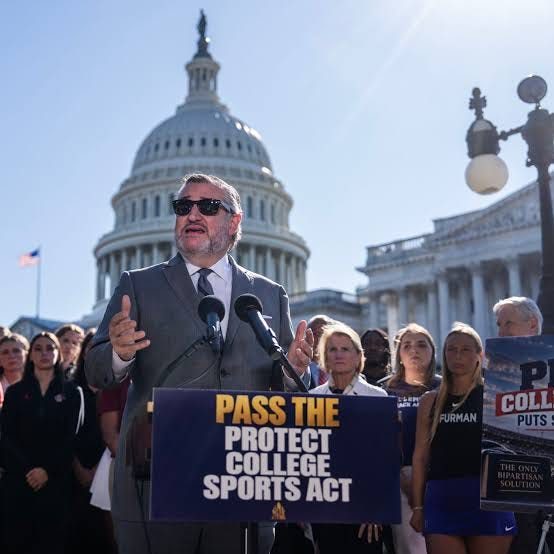
The Senate just passed the Protect College Sports Act by a huge 77–22 vote. The bill was led by Sens. Ted Cruz (R-TX) and Maria Cantwell (D-WA).
If you’ve lost track of what is legal, illegal, allowed, banned, or currently being litigated in college sports, you are not alone. So here’s the quick FAQ on the legislation.
What does the bill do?
It tries to create one national set of rules for college sports, especially around athlete pay, NIL deals, transfers, scholarships, and medical benefits.
Can college athletes still get paid?
Very much so.
Athletes could continue signing NIL deals, and schools could keep paying players directly through revenue sharing.
The bill would also let schools spend considerably more to retain athletes. Between revenue sharing and additional retention funds, some schools could eventually spend close to $49 million per year on athlete pay.
So what does the NCAA get?
Something it has wanted for years: limited protection from antitrust lawsuits.
That would make it harder for athletes to challenge certain NCAA and conference rules in court, including limits on compensation. Most of the lawsuits that led to paying college athletes were waged and won on antitrust arguments.
That is probably the biggest fight buried inside the bill. Supporters say college sports need standardized and enforceable rules. Critics worry the NCAA would regain too much power to restrict athletes.
What happens to the transfer portal?
It gets tighter.
Players would generally get one transfer without sitting out. A second transfer could cost them a year of eligibility, although there are exceptions for things like coaching changes, graduate school, or a program being eliminated.
What else do athletes get?
The bill includes stronger scholarship protections, limits agent fees to 5%, requires certain medical coverage for sports injuries for five years after eligibility ends, and offers some former athletes financial help to return and finish their degrees.
Does the bill designate athletes as employees?
Congress punted on this question.
The bill specifically does not decide whether athletes are employees, leaving one of the biggest legal questions in college sports unresolved.
Is this law yet?
No.
The Senate passed it. The House still has to pass the same bill, and then it would go to President Trump.
So the Senate has written its version of a new college sports rulebook.
Now we find out whether the House wants to play by it. And since the House has left DC until after the midterms, don’t expect this bill to move anytime soon.