


Congress just did something increasingly unusual: Republicans and Democrats overwhelmingly agreed on a major piece of legislation.
The 21st Century ROAD to Housing Act passed the Senate 85–5 and the House 358–32. The sprawling package combines more than 60 separate proposals aimed at increasing the housing supply, lowering construction barriers, expanding access to mortgages, and improving federal housing programs.
And then President Trump refused to sign it.
Trump canceled a planned signing ceremony and said the housing bill would remain unsigned until Congress passes the SAVE America Act, an unrelated election bill requiring documentary proof of citizenship to register for federal elections. House Speaker Mike Johnson says Trump still plans to sign the housing legislation, but for now, one of Congress’s rare bipartisan accomplishments is caught in a fight over voting rules.
So, what exactly is in the housing bill? Here’s your Crash Course.
1. Incentives for communities to build more housing
The bill creates grants for local governments that make measurable progress increasing their housing supply through faster permitting, greater density, zoning changes, and other reforms.
It also rewards some communities that accelerate home construction—and slightly reduces certain federal development funds for those that consistently fail to build.
Translation: Washington cannot rewrite your town’s zoning code, but it can use federal money to make saying “yes” to new housing more attractive.
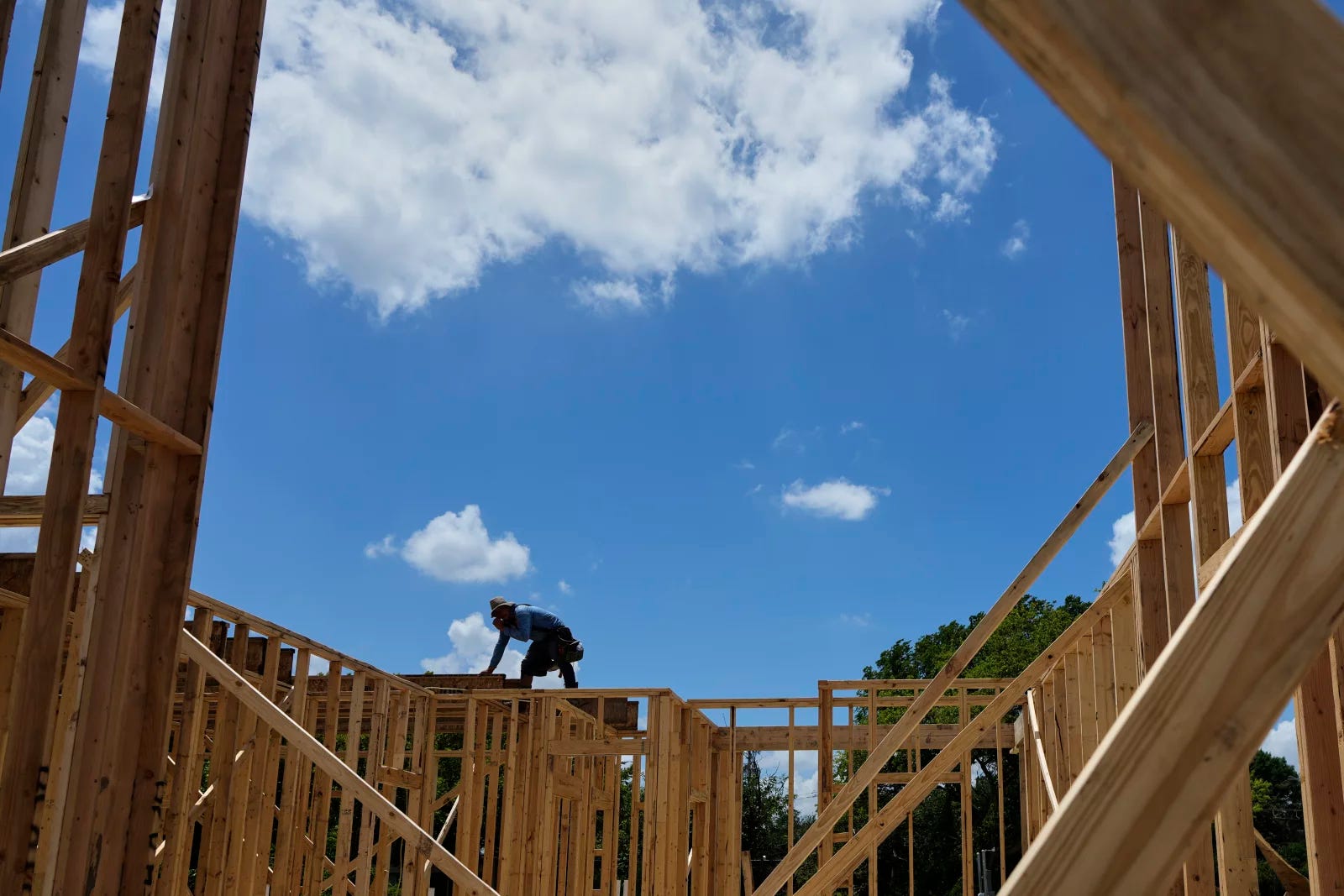
2. Faster approvals for housing projects
The bill streamlines federal environmental reviews for many federally supported housing projects, including smaller developments on already developed land.
It also funds pre-approved designs for accessory dwelling units, duplexes, and townhouses, allowing builders to spend less time repeating the same design-and-permitting process in every community.
The goal: reduce the procedural time and expense required to turn an approved housing idea into an actual home.
3. Limits on large investors buying houses
Companies that already own at least 350 single-family homes would generally be prohibited from buying newly constructed houses intended for individual buyers.
There is an important exception: institutional investors could still build or purchase homes specifically created as rental communities. The bill also establishes a HUD resource to help tenants renting from large investors navigate landlord disputes.
So this is a restriction on corporations competing with families for homes—not a complete ban on corporate ownership of rental houses.
4. More support for manufactured and modular homes
The bill updates federal rules and loan limits for manufactured housing, makes financing accessory dwelling units easier, and directs HUD to reduce barriers facing modular-home builders.
It also extends grants used to repair and preserve existing manufactured homes and manufactured-home communities.
These homes can often be built faster and more cheaply than traditional houses, making them an important piece of the supply puzzle.
5. Help for smaller mortgages and home repairs
The bill allows HUD to test a program expanding FHA-backed mortgages below $100,000—loans that banks often have little financial incentive to offer.
It also creates a pilot program supporting state and local initiatives that provide grants or forgivable loans for major home repairs.
That could help buyers finance lower-priced homes and help existing owners repair properties before they become uninhabitable.
6. Changes to affordable, rural, veteran, and disaster housing
The package updates the federal HOME affordable-housing program, allows greater flexibility in how its money is used, and expands the use of federal community-development funding for new housing construction.
It also reforms rural housing programs, creates a three-year federal disaster-recovery program, makes it easier for some disabled veterans to qualify for supportive housing, and increases awareness of VA home loans.
Will it make housing affordable?
Eventually, it may help. Immediately, probably not much.
The bill attacks several genuine causes of high housing costs: too few homes, slow approvals, outdated regulations, limited financing options, and local resistance to construction. But it does not override local zoning nationwide, dramatically subsidize home purchases, or lower mortgage rates.
Its basic theory is that America needs to build more housing, in more forms, with fewer delays. That will take years to meaningfully affect prices.
Still, in today’s Congress, getting 443 House and Senate votes behind almost anything is impressive. Getting that many lawmakers to agree on housing policy is practically a zoning miracle.
Now they need the president to sign it.
As always thanks for the crash and laying it out.
With those kind of numbers, they can just override any presidential veto. Whether they will or not remains to be seen--there's not much backbone in Congress these days.