


Schoolhouse Rock taught us that for a bill to become a law both the House and Senate must pass it then the president has to sign it. Badda-bing badda-boom, law.
But, Crashers, did you know that the Constitution says that a Congress-passed bill can become law even if POTUS keeps his pen in the drawer?
And in recent weeks, two laws have been put on the books without Trump putting his name on either one. In fact, two in two days.
How does that work?
According to the Constitution, the president has 10 days to decide what to do with a bill passed by Congress. Sundays don’t count as one of the 10 days because, you know, church.
During the 10 day window, POTUS has three options:
Put his John Hancock on it, making it a law immediately.
Veto the thing, which sends it back to Congress. (Congress can override the veto with a 2/3rds vote in each chamber).
Do notta.
If POTUS chooses option 3—neither signs or vetos—AND Congress remains in session, the bill will automatically become law after the 10 days run out. The ‘Congress remains in session’ part is important because being in session means they are still in the swamp ready to receive and act on a presidential veto).
But if Congress is NOT in session, they technically can’t receive the bill back from the White House. Which means, the president doing notta on the bill produces a pocket veto, which kills the legislation without requiring a traditional veto.
This means that presidential inaction can either automatically pass or automatically kill legislation. The result depends entirely on if Congress is in session or not when the 10 day clock expires.
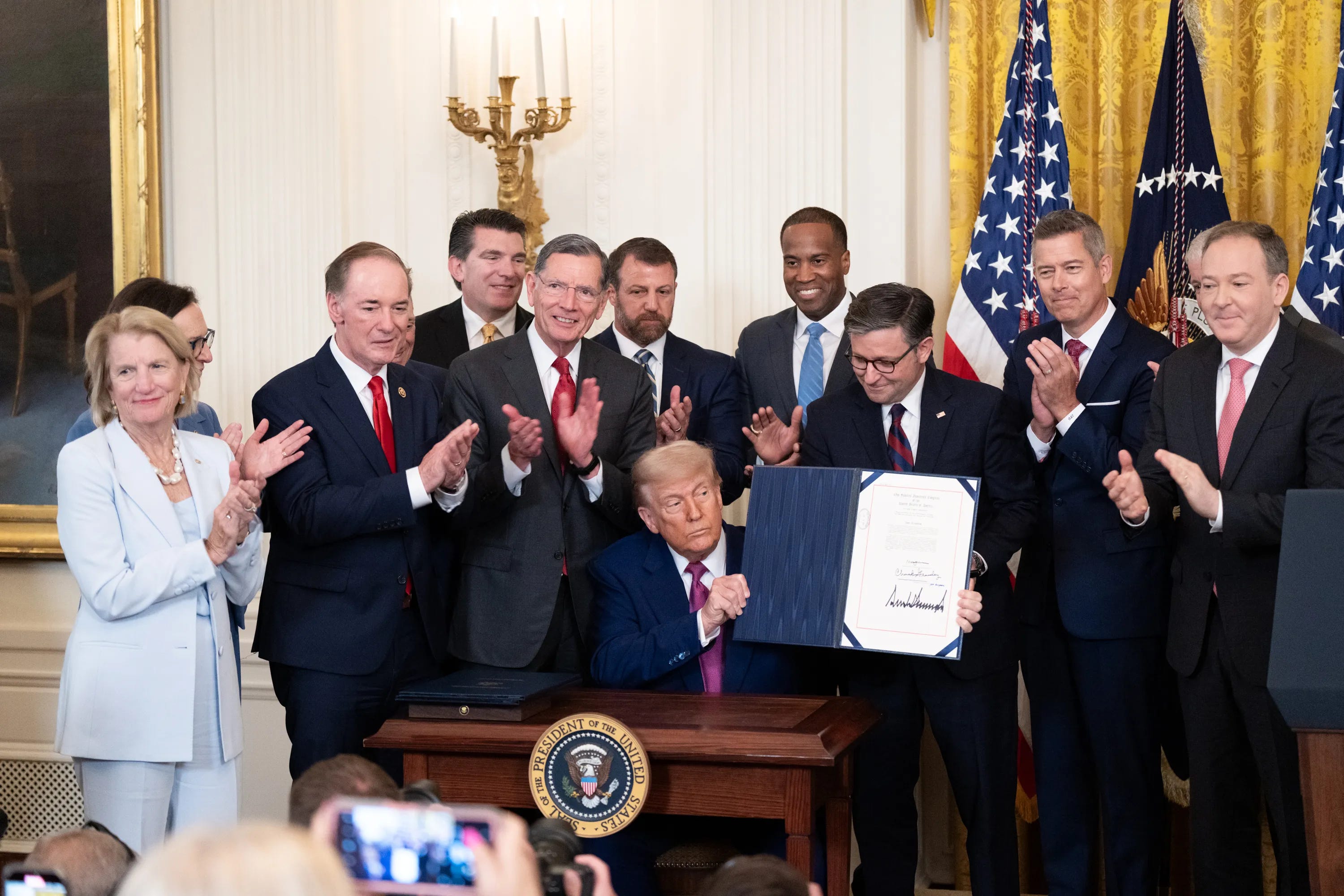
What were the two bills?
The first bill that became law with no Trump signature was the 21st Century ROAD to Housing Act, a large bipartisan housing affordability package. And for all my friends who say the two parties agree on nothing, the Senate passed it 85—5 and the House passed it 358—32.
This bill shoulda, woulda, coulda been a major win for Trump and the GOP (and Americans, for that matter). Instead, he cancelled the signing ceremony because the Senate had not passed the SAVE America Act, his election proposal requiring proof of citizenship to register and identification to vote.
Trump allowed the ten-day deadline to expire and the housing bill became law without his signature on July 11.
The next day, he did it again with the Emergency Conservation Program Improvement Act changes how farmers, ranchers, and forest owners receive federal disaster aid. The Senate passed it unanimously and the House vote was 368–19.
Again, Trump did nothing, nor did he explain why he withheld his signature. He simply did not act, and the bill became law on July 12.
How rare is this?
Very rare in modern politics. Only ten bills have become law without a president’s signature since 1976. Trump’s two bills account for one-fifth of the entire fifty-year total.
Other recent examples include the Jerusalem Embassy Act, which became law without President Bill Clinton’s signature in 1995, and an Iran sanctions extension that became law without President Barack Obama’s signature in 2016.
Earlier presidents used the option much more often. A White House review prepared for President Gerald Ford found that 136 bills became law without Ulysses S. Grant’s signature. Grover Cleveland allowed 283.
Franklin Roosevelt once called it the Constitution’s “third course.” And FDR took the third course on a 1938 tax bill.
The more you know.
Why?!