


The Supreme Court handed President Trump a win on mail-in voting this week.
But the justices did not rule that Trump has the power to get rid of mail in voting or rewrite other aspects of how states conduct their elections when it comes to mail.
All SCOTUS really ruled is that the states suing Trump went to court too early. That’s basically it.
In a 6–3 decision Monday, the Court lifted a lower-court order that had blocked parts of Trump’s election executive order that put new federal rules on mail voting and voter eligibility checks. The majority (made up of all 6 conservative justices) concluded that the states challenging Trump had not shown the kind of concrete injury needed to bring the case yet.
So Trump won. But the much bigger question—whether what he is trying to do is actually legal—is still unanswered.
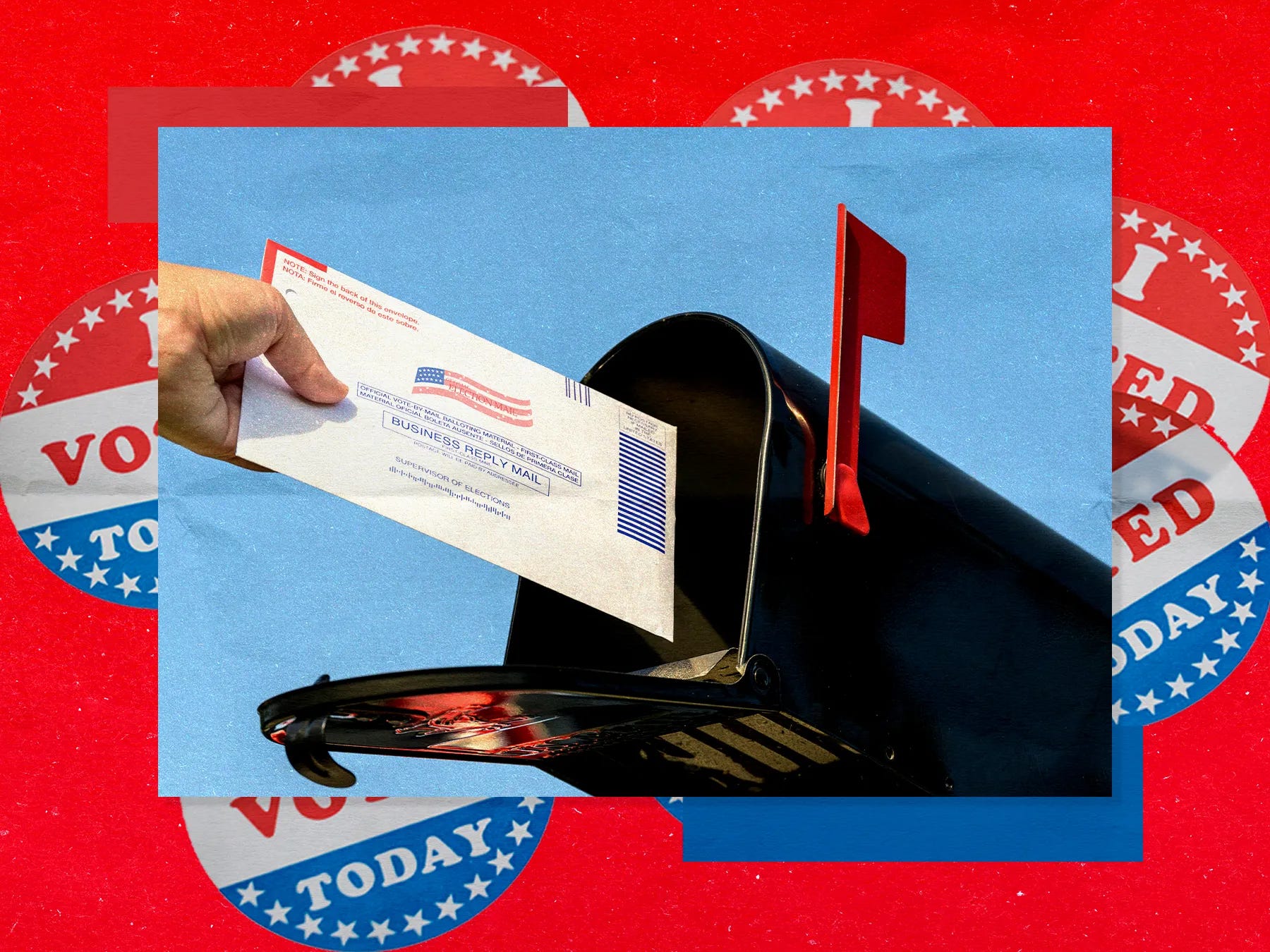
What is Trump trying to do?
Earlier this year, Trump signed an executive order directing several federal agencies to tighten oversight of elections, with a particular focus on mail voting.
The biggest piece involves the Postal Service.
USPS has now issued rules that would require states and local election officials to follow new federal requirements for mail-ballot envelopes and tracking, including individualized barcodes and providing information about voters receiving mail ballots. The administration says the changes will help with tracking, security and enforcement of federal election laws.
The states suing fear something much more nefarious is behind the EO: the president using the Postal Service to get into the business of deciding how states run elections.
Here comes your quick Constitution refresher.
States run elections. The Constitution specifically gives state legislatures the power to set the “Times, Places and Manner” of congressional elections, while giving Congress the authority to step in and change those rules.
Notice who is missing there. The president.
Trump’s argument, though, is not simply, “I control elections now.” His administration says the president can direct federal agencies like the Postal Service and Justice Department to use powers that Congress has already given them.
Whether he is pushing those powers too far is the legal fight everyone expected the Supreme Court to settle. It didn’t. Yet.
What did SCOTUS say?
The Court focused on a more technical issue: whether the states were even allowed to bring this lawsuit when they did.
When the states originally sued, much of Trump’s plan had not happened yet. The Postal Service had been told to write new rules, for example, but those rules were not yet final.
So the majority looked at the lawsuit and essentially said, “you are asking courts to block injuries that might happen in the future.”
Federal courts generally require someone suing to show an actual or imminent injury. That is the legal doctrine known as standing. Courts also generally do not jump into disputes before they are ready for a decision, an idea lawyers call “ripeness.”
Or, without the law-school vocabulary “come back when Trump actually does the thing you’re worried about.”
The Court was pretty clear that its decision was not a ruling that Trump’s plan is legal. In fact, the majority specifically said states could challenge a final Postal Service rule if it injured them.
Well, guess what? There is now a final rule.
So what happens now?
We do it all over again.
On Wednesday, a federal judge lifted another block on the administration’s plan following the Supreme Court decision. At almost the exact same time, roughly two dozen Democratic-led states and Washington, D.C., filed a new lawsuit challenging the final and official Postal Service rule.
So the lawsuit has jumped from Trump might do this to Okay. He did it.
And this time the courts will have a much harder time avoiding the central question of exctl how much power can a president exercise over elections by directing federal agencies like the Postal Service?
There is also a clock ticking. Some states begin sending mail ballots in early September. Election offices are already printing envelopes, programming systems and preparing to process millions of votes.
So, yes, Trump won at the Supreme Court this week.
But he did not win a ruling saying presidents can control mail voting. He won a ruling saying his opponents sued before there was enough to sue over.
Now there is.
Round two starts immediately.