


The Supreme Court’s latest term touched almost everything: citizenship, presidential power, tariffs, voting rights, campaign money, immigration, transgender sports, phone privacy, and the Federal Reserve.
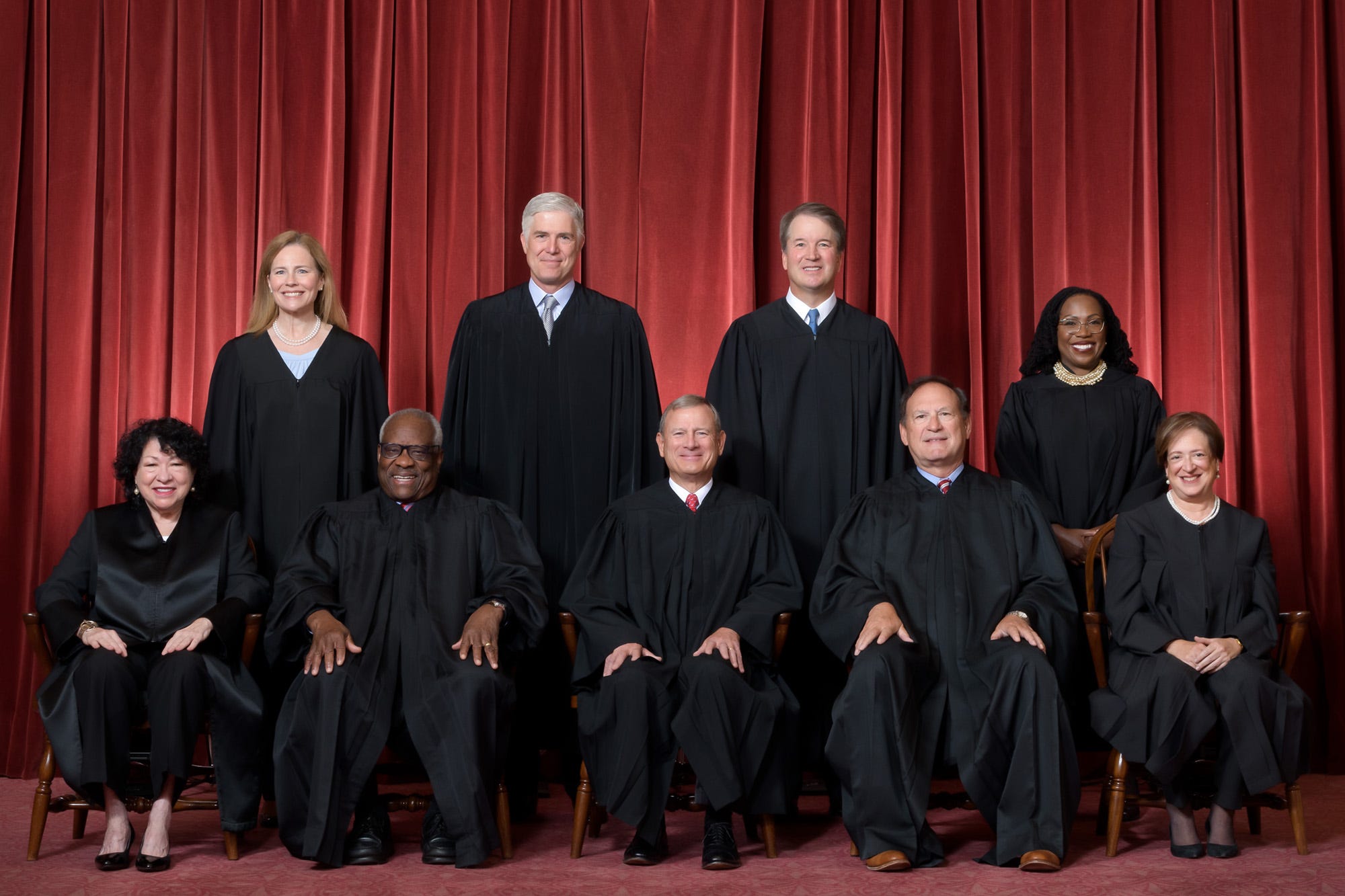
Here are the 10 key rulings to catch you up quickly on the Supreme Court’s latest term.
Trump v. Barbara — The Court rejected Trump’s attempt to limit birthright citizenship, holding that children born in the United States to parents here unlawfully or temporarily are citizens at birth under the 14th Amendment.
Learning Resources, Inc. v. Trump — The Court said the president cannot use emergency powers to impose tariffs on his own because tariff power belongs to Congress unless Congress clearly says otherwise.
Trump v. Slaughter — The Court struck down the FTC’s “for cause” removal protection, making it easier for presidents to fire leaders of independent agencies.
Trump v. Cook — The Court refused to let Trump remove Federal Reserve Governor Lisa Cook while litigation continues, signaling that the Fed may remain a special case even as the Court expands presidential removal power elsewhere.
Louisiana v. Callais — The Court narrowed Section 2 of the Voting Rights Act in redistricting cases, holding that liability requires strong evidence of intentional racial discrimination, not disparate impact alone.
National Republican Senatorial Committee v. FEC — The Court struck down federal limits on party spending coordinated with candidates, giving political parties more freedom to spend directly with campaigns.
West Virginia v. B.P.J. — The Court upheld state rules separating girls’ and boys’ sports teams by biological sex, ruling that the policies did not violate Title IX or the Equal Protection Clause.
Chatrie v. United States — The Court ruled that police conduct a Fourth Amendment search when they obtain a person’s Google location data, recognizing a privacy interest in cell-phone location information.
Mullin v. Doe — The Court allowed the administration to move forward with ending Temporary Protected Status for Syrians and Haitians during litigation, while limiting judicial review of most TPS termination challenges.
Watson v. Republican National Committee — The Court upheld Mississippi’s rule counting absentee ballots postmarked by Election Day and received up to five days later, rejecting the argument that federal law requires ballots to arrive by Election Day.
The term in three sentences
The easiest way to read this term is that the Court was willing to stop Trump on some of his biggest unilateral moves, especially on birthright citizenship, tariffs, and the Federal Reserve.
But it also continued moving the law toward stronger presidential control over agencies, weaker voting-rights claims, looser campaign-money rules, and more deference to states in culture-war fights.
So the Court’s 2026 trajectory was not simply “pro-Trump” or “anti-Trump”—it was more power for conservative constitutional priorities, with a few sharp limits when the administration tried to skip Congress, rewrite the 14th Amendment, or politicize the Fed.
The pairing of Slaughter and Cook is the sharpest tension on this list. The Court made it easier to fire agency heads across the board, then declined to let that same logic reach a sitting Fed governor while her case is still pending. That's either a principled read of what makes the Fed different (its statutory removal protections, its independence from short-term political pressure) or it's a narrower ruling about the posture of Cook's case specifically, one that hasn't actually settled whether the Fed gets a permanent carve-out.
Read next to Learning Resources, a pattern starts to look less like the Court being pro- or anti-executive power in the abstract and more like a distinction between power Congress never delegated in the first place (tariffs) and power the Court is now willing to let the president exercise more freely once an agency already exists (removals). Cook is the one case that doesn't fit cleanly into either bucket yet. Curious whether you think the Fed exception holds once the merits get decided, or whether Slaughter's logic eventually catches up to it.