


On July 4, the United States turns 250.
There will be fireworks, flags, parades, historical reenactors sweating through wool coats, and many extremely confident declarations about what the Founders believed—often from people whose last serious encounter with the Founders involved a middle-school worksheet.
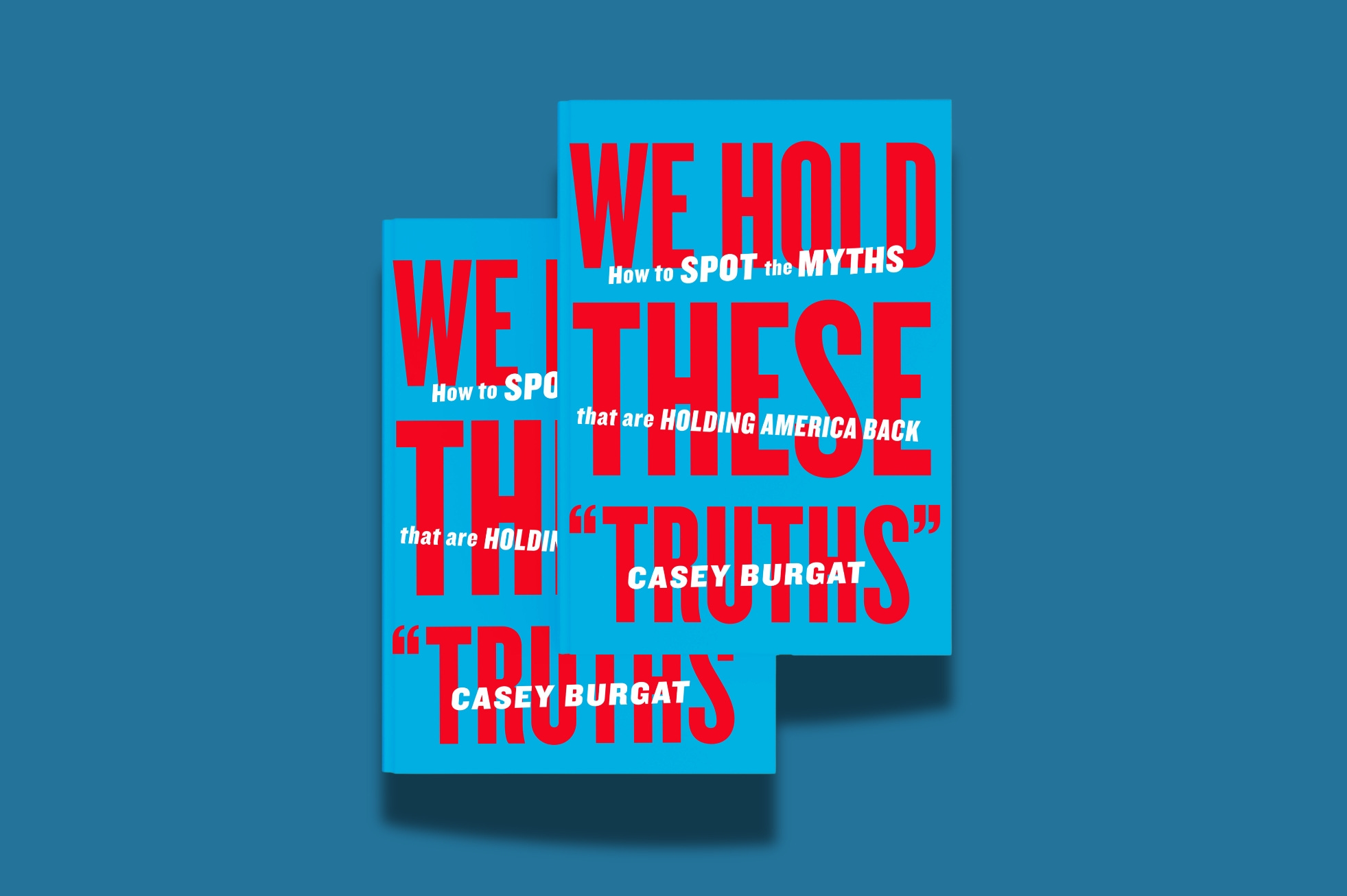
So, with impeccable timing, the paperback edition of We Hold These “Truths”: How to Spot the Myths That Are Holding America Back is currently 50% off on Amazon.
The normal price is $18. Right now, it is $9.
I do not control Amazon’s pricing, which is probably best for everyone involved, and I have no idea how long the discount will last. But nine bucks is less than most airport sandwiches, and the book should leave you feeling considerably less bloated.
This is a shameless book plug. It is also a pretty good deal.
A quick refresher
I wrote and edited We Hold These “Truths” because Americans spend an enormous amount of time fighting about politics without always understanding how our political system works.
That confusion has consequences.
Convenient myths shape what we expect from Congress, presidents, courts, journalists, lobbyists, campaigns, and even voters themselves. They convince us that complicated problems have obvious solutions, that every compromise is corruption, and that anyone who fails to deliver our preferred outcome must be stupid, dishonest, or both.
Those beliefs make us angrier. They rarely make us more accurate.
The book brings together experts from across the political spectrum to examine some of the most persistent myths in American politics. We cover the Constitution and the Founders, presidential power, Congress, bipartisanship, campaign money, lobbyists, the media, the Supreme Court, elections, and several other subjects capable of destroying an otherwise pleasant family dinner.
The goal is to help readers understand how the system really operates, recognize the trade-offs hidden by political talking points, and focus their frustration on problems we might actually be able to solve.
When the book came out last year, I thought the subject was timely.
The intervening year has not exactly produced a nationwide outbreak of constitutional modesty.
Arguments about executive power, the courts, elections, the media, Congress, and the intentions of people who died two centuries ago remain central to American politics. Many of those arguments continue to rely on the same myths the book examines.
That makes the country’s 250th birthday a particularly good time to read it.
An anniversary this large should give us an excuse to celebrate the American experiment. It should also give us an opportunity to inspect it. The country has lasted this long because generations of Americans have argued, compromised, adapted, expanded rights, corrected mistakes, and occasionally admitted that their preferred solution had gone terribly sideways.
Honoring that history requires understanding it.
And right now, understanding it costs nine dollars.
Here is where you come in
My goal is simple: I want as many people as possible to read the book.
The price cut makes that easier. But books still spread primarily because one person tells another person, “You should read this.”
So, whether you are buying the book for the first time or already have a copy sitting handsomely on your shelf, here are a few ways you can help.
1. Tell one person about it
There is no substitute for word of mouth.
You do not need to launch a nationwide publicity campaign or become one of those people who turns every family group chat into a multilevel marketing operation. Think of one person who is curious about politics, frustrated with government, or constantly informing you what the Founders “definitely” intended.
Send that person the link.
You can copy and paste this:
Casey Burgat’s book about the myths surrounding American politics is half off right now. It’s only $9, and I think you’d like it: Amazon link.
One specific recommendation to one specific person is far more meaningful than tossing a link into the social-media void and hoping an algorithm develops an interest in representative government.
2. Leave an honest Amazon review
If you have read the book, please consider leaving an honest review on Amazon.
Reviews matter enormously. They help prospective readers decide whether a book is worth their money and, just as importantly, their time.
The review does not need to resemble a dissertation defense. One or two sentences about what you found useful, surprising, infuriating, or entertaining will do the job.
3. Add it to your Goodreads list
Goodreads users can add the book to their “Want to Read” shelf.
That small action helps other readers discover it and signals that people remain interested in the book beyond its original publication date.
You are also permitted to move it eventually from “Want to Read” to “Read.” Goodreads cannot legally force you, but I will be quietly rooting for progress.
4. Introduce someone to Crash Course
The same principle applies to this newsletter.
If you know someone who wants to understand politics without needing a law degree, a political-science doctorate, or six uninterrupted hours of cable news, forward them a Crash Course post and encourage them to subscribe.
Reader recommendations have built this newsletter. Every new subscriber makes it possible to reach more people with accessible, non-hysterical explanations of how American government works.
Those seem moderately useful as the country enters its 251st year.
One higher-leverage option
Teachers, professors, book-club organizers, office managers, civic-group leaders, and anyone else with authority over a captive audience can also read the book as a group.
A professor assigning it to a class, a book club choosing it for a month, or an organization buying copies for its staff can put the book in front of dozens of people at once. That is how books travel beyond an author’s immediate audience.
It also gives everyone a structured environment for arguing about lobbyists and presidential power, rather than forcing those subjects into Thanksgiving dinner without warning.
For bulk pricing and to explore events and speaking engagements, just reply to this email.
That’s the pitch
America will turn 250 on July 4.
We should celebrate. We should appreciate how improbable the whole experiment has been. We should also use the occasion to get more honest about how our government was designed, how it has changed, why it struggles, and what can realistically make it better.
That is the conversation We Hold These “Truths” was written to start.
Right now, the paperback is $9 on Amazon. Grab a copy before Amazon remembers what books cost.
And if you already own it, please help it find its next reader.
Just ordered it! Dorothy Hunt (Charlie’s Mom). Love your crash courses.
I loved the book!